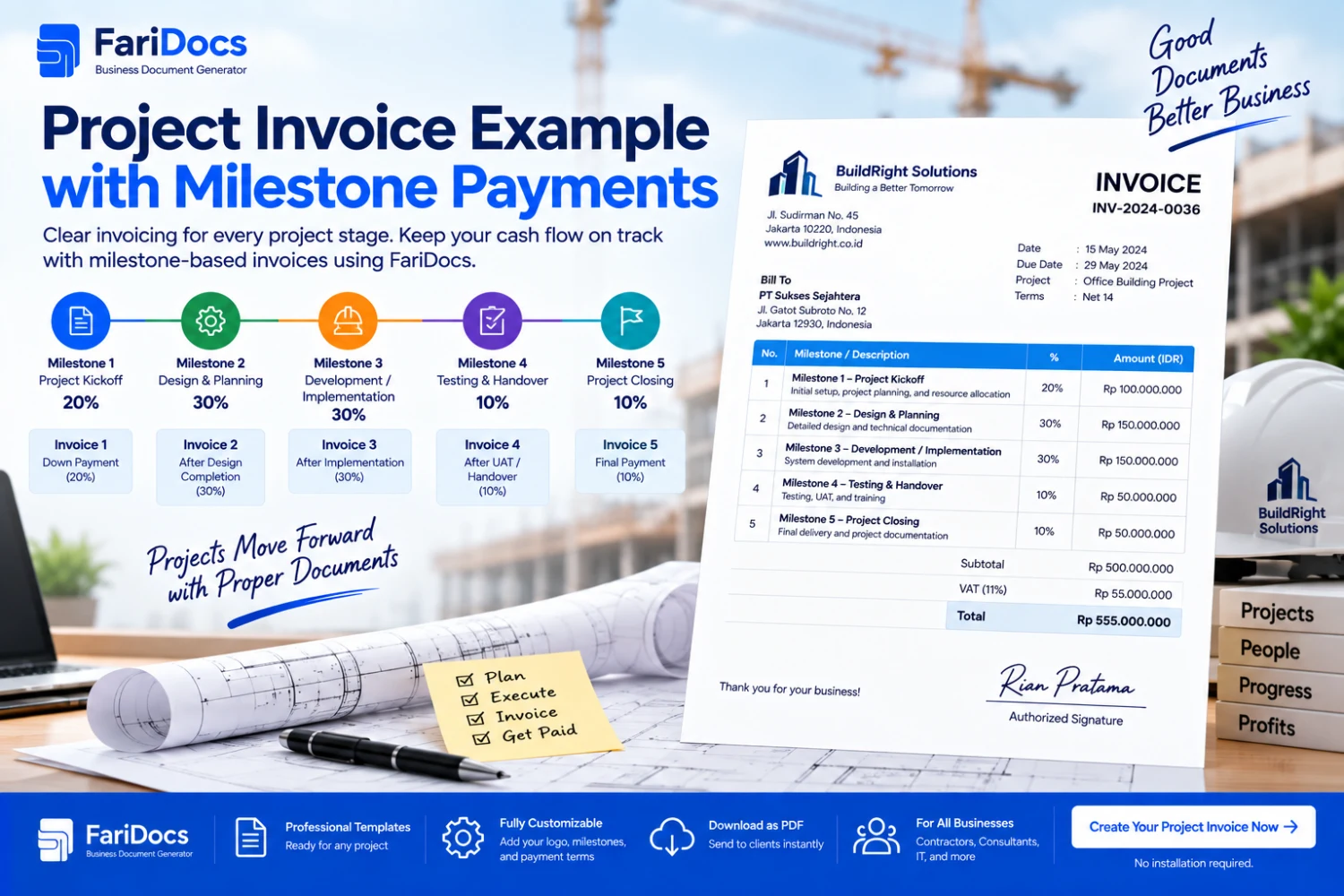
A project invoice with milestone payments bills a portion of the project price according to an agreed schedule or work stage. Each invoice identifies the installment, billing condition, amount payable, and due date.
This approach can be used for website development, consulting, network installation, renovation, and other projects paid in stages.
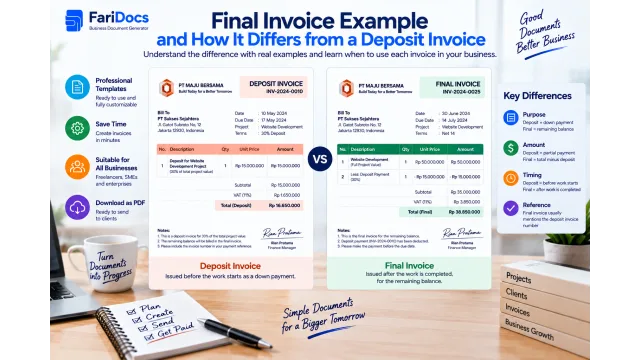
A clear invoice distinguishes the total project value, the current installment, and payments already received. These figures serve different purposes and must be handled consistently.
What Are Milestone Payments?
Milestone payments divide a project’s price into installments. Payment conditions may include:
- A deposit before work begins.
- Completion of a specified stage.
- Reviewed and approved progress.
- Agreed calendar dates.
- Final completion and handover.
For example, a project worth IDR 20,000,000 might require a 30% deposit, 40% after approval of an intermediate stage, and 30% after handover.
A payment percentage does not necessarily represent the percentage of physical work completed. A 40% installment can be the agreed payment allocated to a milestone, rather than a statement that overall progress is 40%.
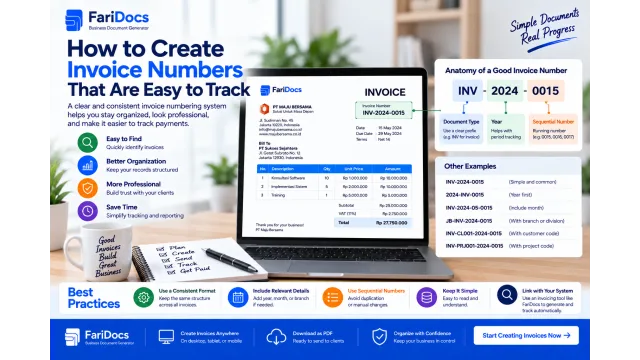
Example Project Payment Schedule
The following fictional website project has a total value of IDR 20,000,000. The example excludes taxes, retention, and other adjustments.
InstallmentAgreed billing conditionPercentageAmountInstallment 1Deposit before work begins30%IDR 6,000,000Installment 2Test version completed and approved by the client40%IDR 8,000,000Installment 3Completion and approved handover30%IDR 6,000,000Total100%IDR 20,000,000Define billing conditions in the quotation or contract. “Payment upon progress” is unclear unless the agreement identifies the required progress and who approves it.
In this example, the second installment becomes billable when the client approves the test version against the agreed scope.
What to Include in a Milestone Invoice
SectionInformation to includeIssuerService provider’s name, address, and contact informationClientCustomer or company name and billing addressInvoice detailsUnique number, issue date, and due dateProject referenceProject name, contract, PO, or quotation numberProject valueAmount used as the basis for the installmentCurrent milestoneInstallment number, percentage, and stage descriptionAmount billedPayment requested on this invoiceSupporting documentsStage approval, progress report, or handover record as requiredPayment instructionsBank details, account holder, and payment referenceIdentify the milestone in the line description:
Installment 2: 40% of the company website project under contract KTR-2026-0021, following approval of the test version.
Complete Example: Second Milestone Invoice
This example uses a separate invoice for each installment. It assumes that the first installment of IDR 6,000,000 has been paid and the second milestone has been approved.
PROJECT INVOICE — INSTALLMENT 2
Issued by:
PT Penyedia Contoh
[Company address]
[Email and phone number]
Payment instructions:
Bank: [Bank name]
Account number: [Account number]
Account holder: [Recipient name]
Notes:
Use INV-PRJ-2026-0021-T02 as the payment reference. The first installment was paid under a separate invoice. This invoice covers only the second installment.
Replace the identities and bracketed fields before using the example.
Calculate Installments without Deducting the Deposit Twice
In this example:
Second installment = 40% × IDR 20,000,000 = IDR 8,000,000.
The IDR 6,000,000 deposit paid the first installment. Because the second invoice covers only the next 40%, do not deduct the first installment again from IDR 8,000,000.
Doing so would reduce the second bill to IDR 2,000,000 and contradict the agreed payment schedule.
Distinguish these two presentations:
Billing approachExample calculationSeparate invoice per installmentBill installment 2 for IDR 8,000,000Cumulative billing through stage 270% × IDR 20,000,000 = IDR 14,000,000, less IDR 6,000,000 previously paid, leaving IDR 8,000,000Both can produce the same amount, but they use different calculation bases. Follow the agreed approach consistently.
Contracts that recover an advance payment through deductions from progress bills need their own calculations. Do not apply this simple 30%–40%–30% example without checking how the agreement handles advances.
Distinguish the Invoice Balance from the Remaining Project Value
When the second invoice is issued, the project position is:
ItemAmountTotal project valueIDR 20,000,000First installment receivedIDR 6,000,000Second installment invoiced and unpaidIDR 8,000,000Third installment not yet invoicedIDR 6,000,000Total project value not yet paidIDR 14,000,000IDR 14,000,000 remains unpaid across the project, but the whole amount is not currently due. The final IDR 6,000,000 still depends on the third milestone’s billing condition.
This distinction prevents payment reminders from including work that is not yet billable.
Supporting Documents for Milestone Billing
Requirements depend on the agreement and the client’s procedures. Useful documents may include:
- An accepted contract, PO, or quotation.
- A progress report covering the billed stage.
- Written approval of completed work.
- Inspection or handover records.
- Approved additional work details.
Not every project needs every document. Confirm the finance team’s requirements before submitting the invoice.
How to Create a Milestone Invoice with FariDocs
The FariDocs invoice generator provides transaction references, billing details, payments received, preview, and PDF download.
For separate installment invoices:
- Enter both parties. Use names consistent with the agreement.
- Create a unique invoice number. For example, INV-PRJ-2026-0021-T02.
- Add the project reference. Identify the contract and project.
- Enter the current installment. Use a line amount of IDR 8,000,000 for the second milestone.
- Explain the calculation. State that the bill represents 40% of IDR 20,000,000.
- Check payment allocation. Do not record the first installment as payment against the second invoice.
- Review and download the PDF. Send it with the required supporting documents.
You can explain the total project value in the notes. Do not add it as another charge when the invoice bills only one installment.
Sample Email for Sending a Milestone Invoice
Subject: Installment 2 Invoice — Website Project — INV-PRJ-2026-0021-T02
Dear [Client Name],
Please find attached the second installment invoice for the website development project under contract KTR-2026-0021.
The amount of IDR 8,000,000 represents 40% of the project value, following approval of the test version on 12 September 2026. Payment is due on 28 September 2026.
The milestone approval document is attached for your review. Please confirm receipt and let us know if any additional documentation is needed.
Thank you for your cooperation.
Best regards,
[Name and company]
Frequently Asked Questions
Should each installment have a different invoice number?
Yes, when issuing separate installment invoices. Keep the same project reference while giving each bill a unique number.
Can a milestone invoice be issued before the project is complete?
Yes, when the agreement allows advance or intermediate payments. Ensure the relevant billing condition has been met.
What if the client partially pays an installment?
Allocate the payment to the correct invoice. If an IDR 8,000,000 installment receives IDR 5,000,000, the remaining balance on that invoice is IDR 3,000,000.
How should additional work be billed?
Agree on the scope, price, and effect on the payment schedule first. Reference the approved change when billing it.
What if the project includes retention?
Separate the billed amount, retention withheld, and current payment due according to the contract. Explain when retention becomes billable or releasable. This article’s calculations exclude retention.
Does the final invoice mean the project is fully paid?
No. It is a payment request. The project is fully paid only after all required payments have been received and reconciled, including retention where applicable.
Create your milestone invoice with FariDocs. Identify the work stage, calculation basis, and current amount due so your client can review each project payment clearly.