
What Is a Proforma Invoice?
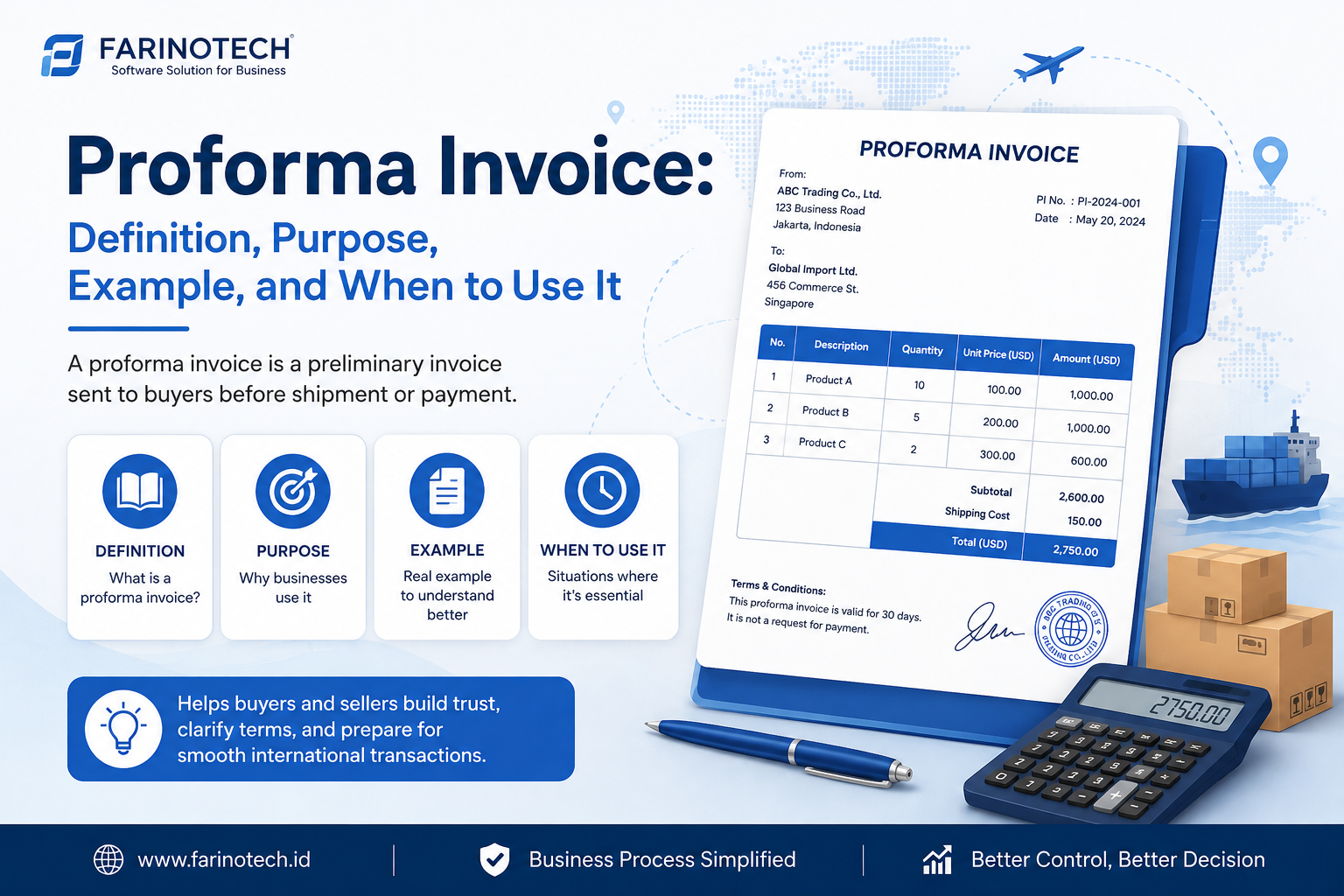
A Proforma Invoice is a commercial document issued by a seller to provide a buyer with detailed information about a proposed transaction before the final sale or shipment takes place.
It commonly includes:
- Products or services
- Quantity
- Unit price
- Shipping costs
- Taxes where applicable
- Total transaction value
- Payment terms
- Delivery terms
A Proforma Invoice is often used when the transaction details need to be communicated, reviewed, or approved before the final invoice is issued.
The simplest way to understand it is:
A Proforma Invoice provides preliminary transaction details before the final invoice is issued.
It should not automatically be treated as the same document as a final commercial invoice or payment invoice.
Is a Proforma Invoice the Same as an Invoice?
No.
Although both documents may contain similar information, they serve different purposes.
Proforma Invoice
Used to communicate preliminary or proposed transaction details.
Invoice
Used as a formal billing document according to the seller's sales and accounting process.
In simple terms:
Proforma Invoice = preliminary transaction document
Invoice = formal billing document
The exact accounting, tax, and legal treatment of these documents can vary depending on the country, transaction type, and applicable regulations.
What Is the Purpose of a Proforma Invoice?
A Proforma Invoice can serve several purposes in business transactions.
1. Provide Detailed Transaction Information
A Proforma Invoice gives the buyer a clear view of the proposed transaction.
It may include:
- Product description
- Quantity
- Price
- Discount
- Shipping
- Taxes
- Total amount
- Currency
- Payment terms
- Delivery terms
This helps both parties confirm that the transaction details are aligned.
2. Support Internal Approval
Many companies require internal approval before purchasing goods or services.
A Proforma Invoice can provide supporting information for an approval process.
For example:
Purchase Request
↓
Quotation / Proforma Invoice
↓
Management Approval
↓
Purchase Order
↓
Invoice
↓
Payment
The exact workflow depends on the company's purchasing and finance policies.
3. Support Advance Payment Processes
Some transactions require a buyer to make a partial or full payment before delivery.
A Proforma Invoice may be used to communicate the amount to be paid in advance when this arrangement has been agreed upon.
However, whether a Proforma Invoice is sufficient for payment purposes depends on the transaction, agreement, financial institution, and applicable requirements.
4. Support International Trade
Proforma Invoices are commonly used in international trade to communicate transaction details before goods are shipped.
Depending on the transaction, the document may include:
- Seller information
- Buyer information
- Product description
- Quantity
- Unit price
- Total value
- Currency
- Country of origin
- Shipping details
- Incoterms
International trade documentation requirements vary by country, product, shipment method, and customs authority.
5. Support Cost and Budget Planning
A Proforma Invoice can help buyers estimate the financial commitment associated with a transaction.
This can support:
- Budget planning
- Cash flow planning
- Procurement approval
- Purchasing decisions
When Should You Use a Proforma Invoice?
A Proforma Invoice can be useful when a transaction has not yet reached its final billing stage but the buyer needs detailed transaction information.
Common situations include:
Before Shipment
A seller provides a Proforma Invoice before shipping goods.
Before Internal Approval
A buyer needs transaction details to obtain approval from management or finance.
For Advance Payment
The parties have agreed that payment will be made before delivery.
For International Transactions
A Proforma Invoice is required or useful for a particular international trade process.
When Transaction Details Are Still Preliminary
The price, quantity, shipping cost, or other details may still change before the final transaction is completed.
When Is a Proforma Invoice Not Necessary?
A Proforma Invoice is not required for every transaction.
If the transaction is already finalized and the seller can issue the final billing document directly, a normal invoice may be sufficient.
For example:
Customer Order → Invoice → Payment
In this situation, there may be no need for a Proforma Invoice.
The decision to use one should depend on the company's business process, customer requirements, transaction type, and applicable regulations.
Proforma Invoice Example
Here is a simple example of a Proforma Invoice structure:
InformationExampleProforma Invoice No.PI-2026-00125DateAugust 21, 2026SellerABC Technology Ltd.BuyerXYZ CorporationProductBusiness LaptopQuantity10 unitsUnit PriceUSD 1,000SubtotalUSD 10,000ShippingUSD 200TaxAs applicableTotalUSD 10,200CurrencyUSDPayment Terms50% AdvanceDelivery TermsAs AgreedThe exact format can vary depending on the business and transaction.
What Information Should a Proforma Invoice Include?
There is no single universal format that applies to every business transaction. However, a Proforma Invoice commonly includes the following information.
Seller Information
- Company name
- Address
- Phone number
- Tax information where applicable
Buyer Information
- Company name
- Address
- Contact person
Document Information
- Proforma Invoice number
- Issue date
- Validity period
Product or Service Details
- Description
- Quantity
- Unit
- Unit price
- Discount
- Subtotal
Shipping Information
- Shipping address
- Delivery terms
- Estimated delivery date
- Shipping method
Payment Information
- Payment terms
- Bank information
- Currency
- Payment instructions
For international transactions, additional information such as HS codes, country of origin, Incoterms, and shipping details may be required depending on the transaction and applicable requirements.
Proforma Invoice vs Invoice
The key differences between a Proforma Invoice and an Invoice are related to their purpose and timing.
AspectProforma InvoiceInvoicePurposeProvide preliminary transaction detailsRequest/record formal billingStageUsually before final billingUsed for final billing according to the sales processNaturePreliminaryFormalAmountMay changeRepresents the amount applicable to the final transactionPayment due dateNot necessarily a formal billing due dateMay include a formal payment due dateMain functionTransaction preparationBilling and accountingRevisionUsually more flexibleSubject to accounting and document-control proceduresA Proforma Invoice should therefore not automatically be treated as a replacement for a final invoice.
Proforma Invoice vs Commercial Invoice
A Proforma Invoice is also different from a Commercial Invoice.
Proforma Invoice
Usually provides preliminary transaction information before the transaction or shipment is finalized.
Commercial Invoice
Provides commercial details associated with a completed sale and is commonly an important document in international shipping and customs processes.
In simple terms:
Proforma Invoice
→ Preliminary transaction information
Commercial Invoice
→ Final commercial transaction documentation
For international shipments, businesses should verify the documentation requirements of the destination country, customs authority, carrier, and applicable regulations.
Proforma Invoice vs Quotation
Proforma Invoices and quotations are also sometimes confused.
Quotation
A quotation is primarily a price offer made by a seller to a prospective customer.
Proforma Invoice
A Proforma Invoice generally presents more detailed transaction information in an invoice-like format for a transaction that is being prepared.
A possible workflow is:
Customer requests pricing
↓
Seller sends Quotation
↓
Customer accepts the offer
↓
Seller issues Proforma Invoice
↓
Customer approval / advance payment
↓
Transaction or shipment
↓
Final Invoice
However, not every business follows this exact sequence.
Can a Proforma Invoice Be Used for Billing?
Generally, a Proforma Invoice is not the final billing invoice.
It may communicate the expected transaction amount and may support an advance-payment process where agreed, but it does not automatically replace the final invoice.
When formal billing is required, the seller should issue the appropriate invoice according to its accounting process and applicable requirements.
Proforma Invoice in a Digital Business Workflow
In modern businesses, a Proforma Invoice can become part of an integrated sales and finance workflow.
For example:
Quotation
↓
Sales Order
↓
Proforma Invoice
↓
Customer Approval / Advance Payment
↓
Delivery
↓
Invoice
↓
Payment
With SaaS software, each document can have a clear status and transaction history.
For example:
Proforma Invoice #PI-2026-00125
Status:
Draft → Sent → Accepted → Prepaid → Converted to Invoice → Completed
This can help sales, finance, and management teams understand the current status of each transaction.
Problems with Managing Proforma Invoices Manually
As transaction volume grows, managing Proforma Invoices through spreadsheets and manual documents can create operational challenges.
Duplicate Document Numbers
Teams may struggle to maintain consistent document numbering.
Difficult Document Retrieval
Files may be scattered across computers, email inboxes, cloud storage, and shared folders.
Poor Approval Visibility
It can be difficult to identify who created or approved a document.
Repetitive Data Entry
Customer, product, pricing, and quantity data may need to be entered repeatedly when creating the final invoice.
Human Errors
Manual processes increase the risk of mistakes involving:
- Customer
- Quantity
- Price
- Tax
- Currency
- Total
- Payment terms
How Can Invoicing Software Help?
Invoicing software or an ERP system can connect Proforma Invoices with other sales and finance documents.
For example:
Quotation
→ Sales Order
→ Proforma Invoice
→ Invoice
→ Payment
A digital workflow can help businesses:
- Create Proforma Invoices faster
- Reuse existing customer data
- Reduce repetitive data entry
- Control document numbering
- Track document status
- Maintain transaction history
- Reduce manual errors
- Improve reporting
Key Features of Proforma Invoice Software
Companies looking for invoicing software should consider features such as:
Proforma Invoice Management
Create, edit, approve, and manage Proforma Invoices digitally.
Customer Management
Store customer information in one centralized system.
Product and Service Management
Maintain product and service data so users do not have to repeatedly enter the same information.
Automatic Numbering
Automatically generate document numbers based on the company's numbering rules.
PDF Generation
Generate professional PDF documents that can be sent to customers.
Approval Workflow
Allow documents to be reviewed and approved before they are issued.
Convert Proforma Invoice to Invoice
Convert an approved Proforma Invoice into an invoice without re-entering all transaction data.
Payment Tracking
Track advance payments and payment status based on the company's workflow.
Audit Trail
Record who created, edited, approved, or sent each document.
Dashboard and Reporting
Monitor:
- Total Proforma Invoices
- Draft
- Sent
- Approved
- Converted to Invoice
- Outstanding
- Paid/Prepaid
How Farinotech Can Help Digitalize Invoicing
As transaction volumes increase, companies need systems that connect sales, invoicing, and finance processes.
A SaaS-based solution can help businesses create workflows such as:
Quotation → Sales Order → Proforma Invoice → Invoice → Payment
Farinotech provides software development and cloud application services that can support businesses in building digital solutions around their operational requirements.
With the right system, a Proforma Invoice does not need to exist as an isolated document. It can become part of an integrated sales and finance workflow.
Looking to build a more structured invoicing workflow?
Discuss your business application and SaaS requirements with the Farinotech team.
Proforma Invoice FAQ
What is a Proforma Invoice?
A Proforma Invoice is a commercial document that provides preliminary transaction details to a buyer before the final sale or billing process is completed.
What is the purpose of a Proforma Invoice?
It can communicate transaction details, support internal approval, support advance-payment arrangements, assist with cost planning, and support certain international trade processes.
Is a Proforma Invoice the same as an Invoice?
No. A Proforma Invoice is generally a preliminary transaction document, while an Invoice is a formal billing document used according to the seller's accounting process.
Is a Proforma Invoice mandatory?
Not always. Whether one is needed depends on the transaction, business process, customer requirements, and applicable regulations.
When should a Proforma Invoice be used?
It is commonly used before final billing or shipment when the buyer needs detailed information about products, services, pricing, quantity, payment terms, or transaction value.
Can a Proforma Invoice be used for payment?
It may support an advance-payment process when agreed by the parties, but it is generally not a substitute for the final invoice.
What is the difference between a Proforma Invoice and a Quotation?
A quotation is primarily a price offer, while a Proforma Invoice usually provides more detailed transaction information in an invoice-like format.
What is the difference between a Proforma Invoice and a Commercial Invoice?
A Proforma Invoice generally provides preliminary transaction information, while a Commercial Invoice documents the commercial details of a final sale and is commonly used in international shipping and customs processes.
Conclusion
A Proforma Invoice is an important document for transactions that require detailed information before final billing or shipment, but it should not be confused with a final Invoice or Commercial Invoice.
A simple way to remember the difference is:
Quotation = Price offer
Proforma Invoice = Preliminary transaction details
Invoice = Formal billing document
Commercial Invoice = Final commercial transaction documentation
In a digital workflow, businesses can connect these documents through:
Quotation → Sales Order → Proforma Invoice → Invoice → Payment
Using SaaS invoicing software can help companies reduce manual work, maintain consistent data, improve document tracking, and create a more efficient sales and finance workflow.